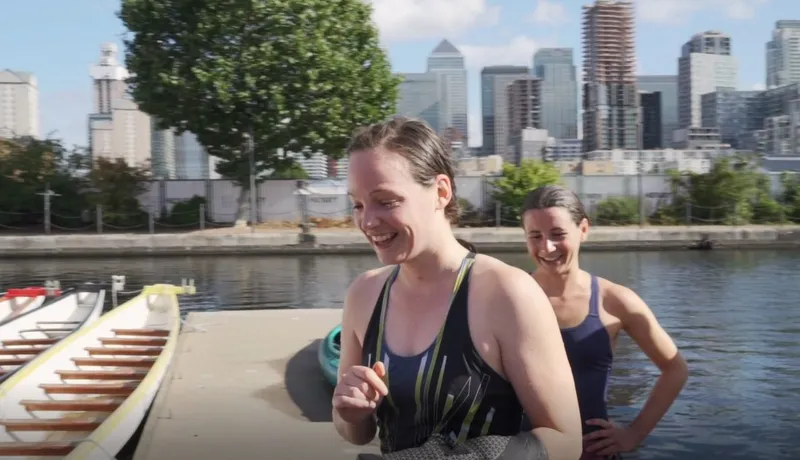

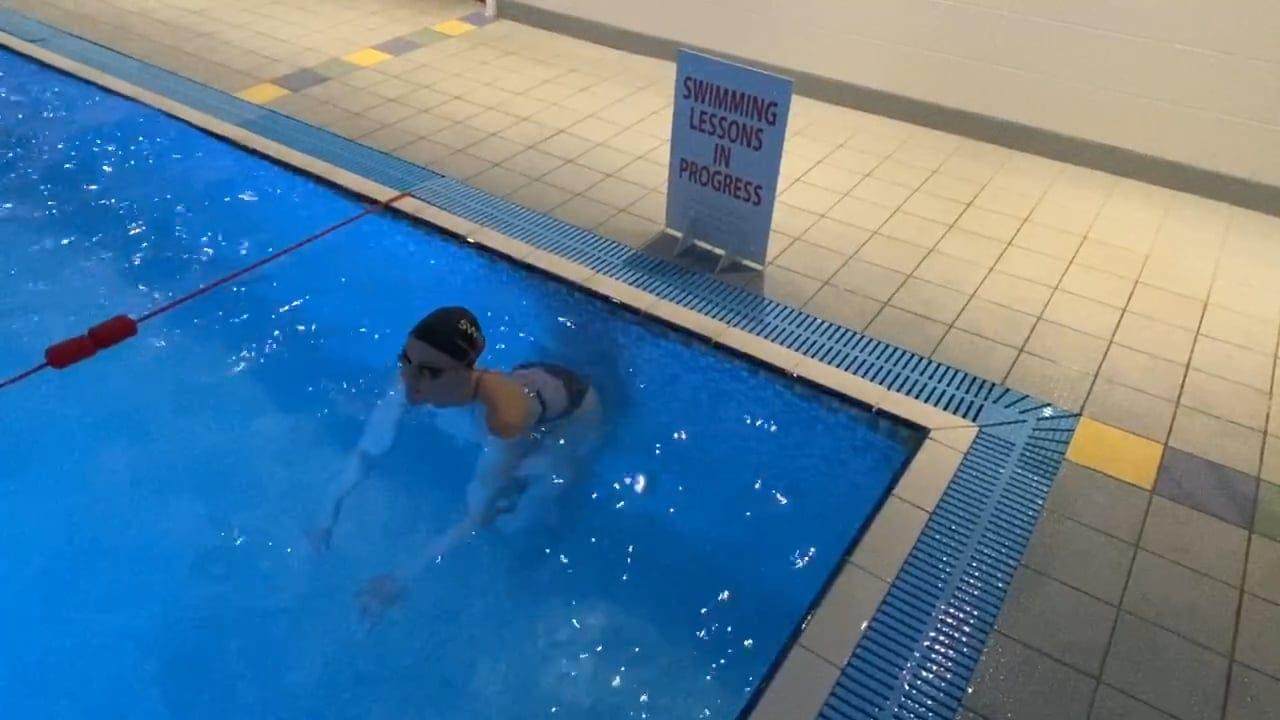
Watch our video of Katie swimming breaststroke beautifully and read her breaststroke blog:
“Breaststroke is widely used throughout the swimming world, whether you’re a child learning to swim with frog legs or an adult swimming ‘head up’ breaststroke. This blog explains all from face in the water breaststroke, why it is important to use the correct ‘glide phase’ and tips on how to move faster through the water.
The key to swimming Breaststroke faster is all about being efficient! The less resistance that the body can create in the water the faster you will swim!
Why do we swim with our face in the water?
A lot of people ask “why do we have to swim with our face in the water on breaststroke?” There are a few reasons for doing this:
- It keeps the body and spine in line from fingertips to toe.
- It’s efficient – there is less resistance against the body, you are streamlined from fingertips to toes.
- It’s faster – as there is less resistance against the body it allows you to move through the water faster.
Why do we have a ‘glide phase’ in Breaststroke?
The glide phase is the key part to breaststroke; this is the only place we pause in the stroke. Many people ask why we have this ‘pause’, and question whether you actually swim faster with this.
Effectively if the glide phase is in a tight streamline position from fingertips to toes (like the picture below) you’ll travel at your fastest speed.
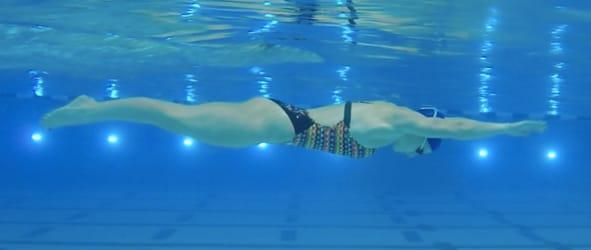
With less resistance on the body, for example, elbows are locked out rather than relaxed, feet are together with toes pointed. All these details are key in the glide phase. Breaststroke is all about the little details that help the stroke perform at its best.
Ensuring that we finish our leg kick before we start our next stroke cycle, we have a two second glide. This allows us to continue travelling through the water. If we begin our arm pull before our leg kick has finished, this creates more resistance against the body that slows us down.”